Services
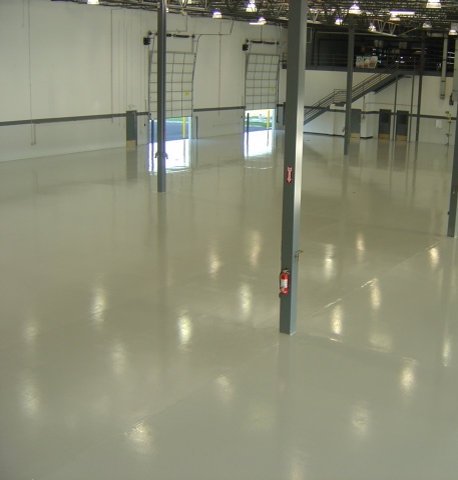
Epoxy flooring solution
We offers professional epoxy floor coating application services to our clients. Our flooring services epoxy floor paint application, concrete polishing, shot blasting and concrete grinding, flooring and adhesive removal, and PVC flooring installation. Our epoxy floor coating and concrete flooring services are ideal for commercial buildings as well as industrial plants.
We can apply floor coatings or other concrete services to new or old concrete floors. Regardless of your floor’s current condition, Advanced Environmental Services can transform your facility into a professional and sophisticated looking facility. Contact us now to learn more about how our floor coating and floor finishing services can meet your needs.
Epoxy Floor Coating
Epoxy is a type of polymer material that begins as a liquid and is converted to a solid state through a controlled chemical reaction. Because of this change in state, epoxy floor coatings are typically a mechanically strong and chemically resistant type of flooring. Epoxy floor coatings are highly adhesive during the conversion from liquid to solid allowing them to create a secure bond with both new and old concrete flooring surfaces.
There are a wide variety of applications and uses for epoxy coatings including epoxy floor paint in commercial and industrial settings as well as for coatings on industrial equipment or machinery. Epoxy floor coatings can also be used as vapor barriers over concrete slabs and foundations in new construction.
How does it work
Epoxy floor coatings are typically comprised of two main components, resins and hardeners. The resin component in an epoxy floor coating is light or clear in color and nearly odor free. Hardeners on the other hand, are dark and have a strong characteristic “ammonia-like” smell. When these two components are mixed together during the epoxy floor coating application process, a chemical reaction begins. This chemical reaction turns the epoxy floor coatings into tough, rigid, and plastic-like materials, which are very durable, waterproof, and chemically resistant.
In general, epoxy floor coatings are available in both one coat and two coat varieties. One-coat application systems allow for faster installation times, while two-coat systems result in a more secure application. Two-coat epoxy floor coatings help to eliminate the risk of developing pinholes or voids during application, which can cause future problems in the durability and waterproofing of the coating.
The epoxy floor coating process is typically done by applying the coatings using a roller. This application is best when performed by experienced floor coating professionals to ensure proper application and durability.
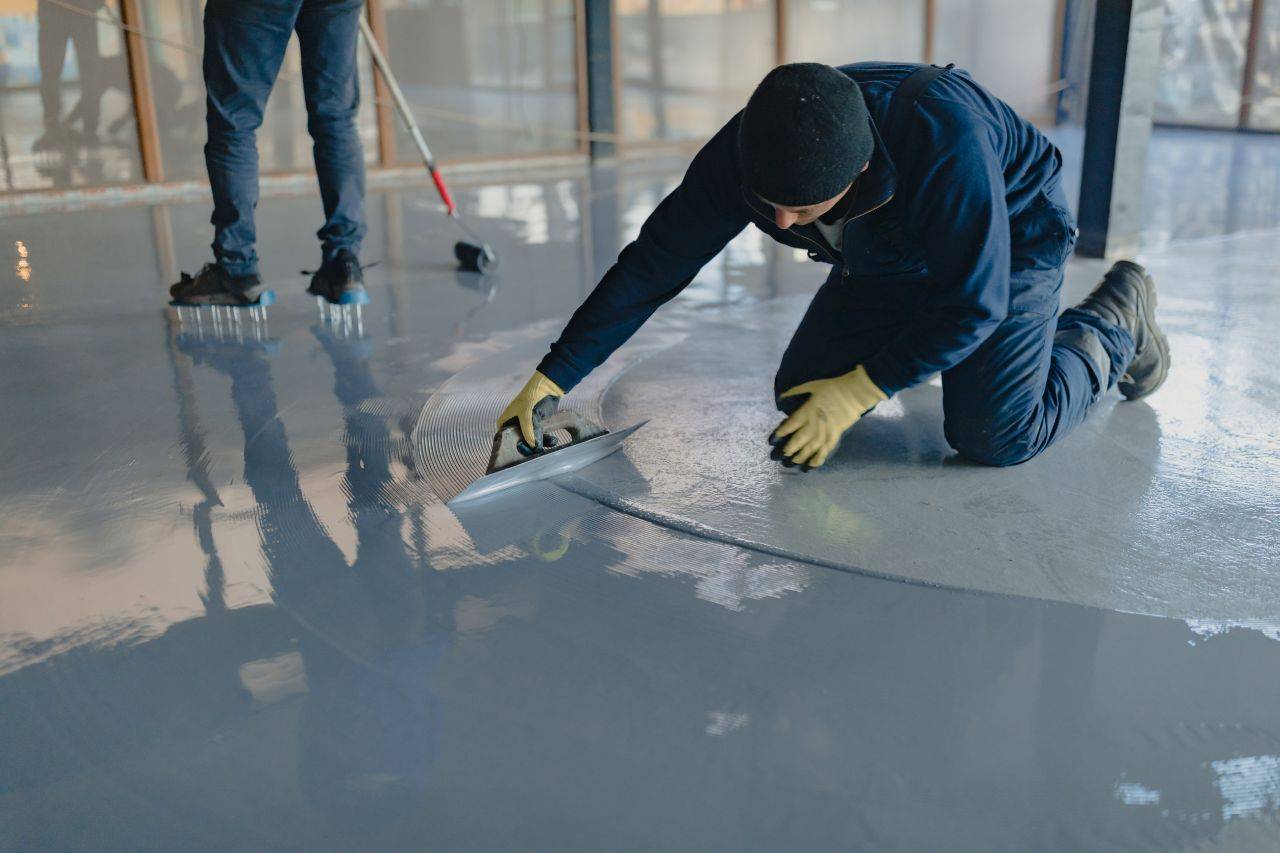
Our Epoxy Floor Coatings
Self Dispersing Epoxy Coatings for Floors :This type of epoxy coating is commonly used in areas that receive frequent forklift or heavy truck traffic as it has very good mechanical strength. Another type of this durable epoxy coating is self dispersing epoxy with quartz sand. This type of epoxy coating is commonly used in food processing industries or other locations where liquids are present because it has good anti-slip characteristics.
Self Leveling Epoxy Coatings for Floors : Self leveling epoxy coatings are easy to install over new and old concrete floors as they level easily creating a seamless and smooth surface. Self leveling epoxy coatings can be used in kitchens, dining rooms, storage places, garages, warehouses, office buildings, and more.
Mortar Epoxy Coatings for Floors : This is the strongest of all epoxy floors. This type of epoxy coating is commonly used in heavy industry applications and can also be used to repair cracks before lying other types of epoxy floors.
Epoxy Floor Paint : Our epoxy floor paint application services include the installation of a high performance, 2-part epoxy floor coating compound. This floor coating results in a high gloss, hard wearing, and durable surface ideal for use over concrete floors in commercial and industrial buildings.
Advantage of epoxy floor coating
Using an epoxy floor coating over your concrete floors will create a high gloss, hard wearing, and durable surface. These floor coatings offer a number of benefits and advantages from the initial installation stages to the long-term maintenance steps. For example, epoxy floor coatings are quick to install and are durable and easy to clean. Because of the many advantages that epoxy floor paint offers, this is an ideal flooring solution for many types of situations.
Create an easy to clean, seamless surface : Our epoxy floor coating products dry to become durable, seamless surfaces that can easily be wiped free of dirt, dust, and debris. Because of this ability for easy cleaning, our epoxy floor coating services are ideal for food, beverage, and pharmaceutical preparation and packaging plants.
Result in a hard wearing and durable surface :Our epoxy floor coating products turn concrete floors into a seamless and durable, high performance surface that will last for years to come
Provide an attractive flooring surface : Our epoxy floor coatings dry to a high gloss shine and are available in a variety of different colors and styles. You can chose to use one solid color or create a decorative pattern using several colors in order to create an attractive and durable flooring solution.
Allow for designated traffic and work zones : We can use different colors of our epoxy floor coating products simultaneously to define safety zones, forklift traffic zones, and other work zones.
Improve safety : Our epoxy floor coating products can improve safety by creating a slip, impact, heat, and fire resistant flooring solution. These high gloss floor coatings can also improve brightness in a work area by 300%.
Offer a cost efficient flooring solution :Epoxy floor coating installation from our professional and experienced epoxy flooring providers is an affordable flooring solution. The durable and hard wearing surface that results from our floor coatings will last for years to come with little to no need for maintenance or up keep costs.
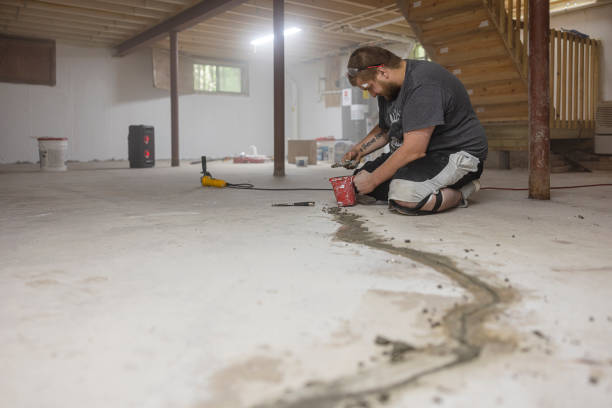
Concrete repair & protection system
Welcome to the Evergreen Hi-Tech, the leading industrial epoxy flooring company in Bangladesh. If you are on the lookout for flooring solutions for companies, factories, ware houses, hospitals and other buildings, then Evergreen Hi-Tech is the best choice for your industrial and all flooring requirements and epoxy flooring related needs. We specialize in providing factory flooring in Bangladesh.
We have extensive experience and expertise in concrete repair and protection. We provides all of the necessary products for the technically correct repair and protection of concrete. These include systems to repair damage and defects in the concrete and also to repair damage caused by steel reinforcement corrosion. Our products and systems are available for use on specific types of structures and general concrete repairs in all different climatic and exposure conditions.
Over time corrosion attack at the rebars becomes a major problem for the serviceability of the structure. Our cement based and resin based repair products help deliver a long-lasting concrete protection and increase the durability of concrete structures
We are working on any damaged concrete - from small cracks, large holes, to complete repair and protection system.
Benefits
- High strength
- Waterproof and frost proof
- Thermal coefficient of expansion similar to concrete
- Easy to use
- Water based
Hot/Cold Washed Brown PET Flakes in Bangladesh
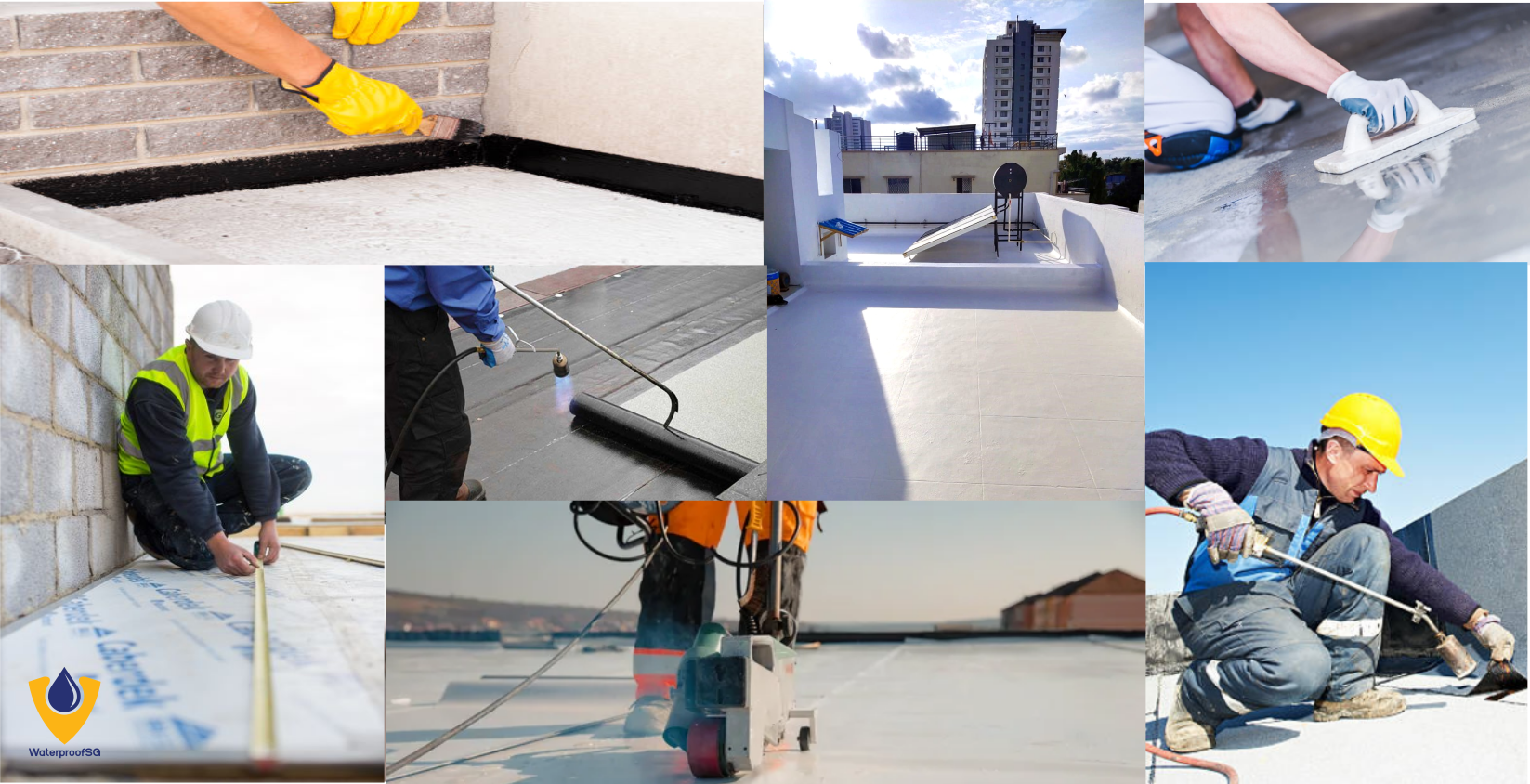
Waterproofing
Evergreen Hi-Tech is Experienced for Epoxy flooring and waterproofing. waterproofing in Bangladesh is a process that is used to prevent water from entering a building through the roof. This process is important in Bangladesh because of the high amount of rainfall that the country experiences. Rooftop waterproofing can be accomplished by using a variety of materials, such as asphalt, tar, rubber, and plastic.
Rooftop waterproofing is one of the most important aspects of commercial roofing. A properly waterproofed roof will protect the building from water damage, extend the roof’s lifespan, and improve energy efficiency.
Waterproofing is a vital step in the roofing process because it prevents water from seeping into the building and causing damage. Water can cause the roof to rot, mold to grow, and structural damage to occur. It is important to waterproof the roof as soon as possible after the roof is installed to prevent these problems from occurring.
There are two main types of rooftop waterproofing: membrane and coating. Membrane waterproofing is a continuous layer of material that is applied to the roof and seals it from water. Coatings are applied in a thicker layer and provide a barrier against water. Both types of waterproofing are effective at protecting the roof, but coatings tend to be more durable and last longer.
Rooftop waterproofing is an important aspect of commercial roofing because it protects the building from water damage, extends the roof’s lifespan, and improves energy efficiency
Rooftop waterproofing is done by applying a waterproofing material to the surface of the roof. This material will form a barrier that will prevent water from entering the building. The type of waterproofing material that is used will depend on the type of roof and the climate. Asphalt, tar, rubber, and plastic are all common materials that are used for rooftop waterproofing.
There are many different types of roof coatings available on the market today. So, which one is the best? The answer to that question depends on a number of factors, including the type of roof you have, the climate you live in, and your personal preferences.
There are also coatings available that are specifically designed for metal roofs, asphalt roofs, and even flat roofs. So, be sure to choose a coating that is compatible with the type of roof you have. Finally, be sure to read the instructions carefully before applying any roof coating. This will help you ensure that the coating is applied correctly and that it will adhere to your roof properly.
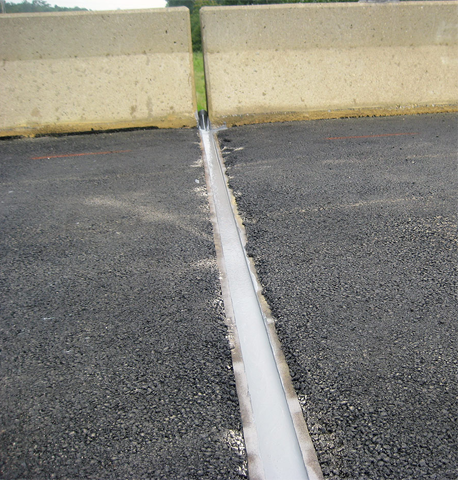
Joint Sealants and Joint Sealing Systems
Joint sealants are used to seal joints and openings (gaps) between two or more substrates, and are a critical component for building design and construction. The main purpose of sealants is to prevent air, water, and other environmental elements from entering or exiting a structure while permitting limited movement of the substrates. Specialty sealants are used in special applications, such as for fire stops, electrical or thermal insulation, and aircraft applications.
The tightness of buildings and hence the role of sealants becomes more and more important in order to achieve low energy ratings for buildings. Without proper joint sealing it would be impossible to insulate a building sufficiently. Sikaflex and Sikasil elastic joint sealants are high-performance products that provide the necessary tightness under any environmental and load conditions. Sika’s elastic joint sealants are able to accommodate thermal and structural movements without breaking or loosing the adhesion.
Selection of Sealants
The proper application of a sealant involves not only choosing a material with appropriate physical and chemical properties, but also having a good understanding of joint design, substrates to be sealed, performance needed, and the economic costs involved in the installation and maintenance of a joint sealant.
Typical considerations for selecting a sealant type for use in the construction industry are::
Joint Design :The specifics of a joint design must match up with a sealant's movement capabilities for the installed conditions. The practicality of installation of the sealant and other joint elements and the desired aesthetic appearance also need to be considered.
Physical and Chemical Properties : Properties of the sealant such as, modulus of elasticity, its stress/strain recovery characteristics, tear strength, and fatigue resistance are all factors that influence sealant performance in a joint. The sealant polymeric type along with additives such as fillers and plasticizers will affect the performance of the product.
Durability Properties : The adhesion of a sealant to a specific substrate(s) and its aging characteristics as they relate to resistance to among others ultra-violet radiation, moisture, temperature, cyclic joint movement, movement during curing, and bio-degradation can profoundly influence the service life of the installed sealant.
Application/Installation Properties : Important considerations include the consistency of the sealant (pourable or gunnable), pot life and tooling time, tack free time, application temperature range, and low temperature "gunnability" (i.e. ability to be dispensed easily by sealant gun). Sealants used for interior applications, even in high-rise or light commercial structures, will have properties and needs different from those used in other applications, such as structural sealant glazing or exterior building facade seals.
Joint Location, Spacing, and Condition
- The location of joint openings must permit applicator access to install joint components and to properly tool the sealant
- The spacing of joints contributes to establishing joint width (wider spacing = wider joints)
- The substrate(s) for sealant adhesion must be sound and free of deleterious materials that would compromise adhesion.
- Window perimeters must provide a minimum 1/4; inch (6 mm) wide surface for the sealant to bond to
- At the butt joints of exposed aggregate precast concrete panels the aggregate must be deleted and a smooth concrete surface provided for sealant adhesion
- At every termination detail there must be adequate access and sufficient bonding area for sealant application
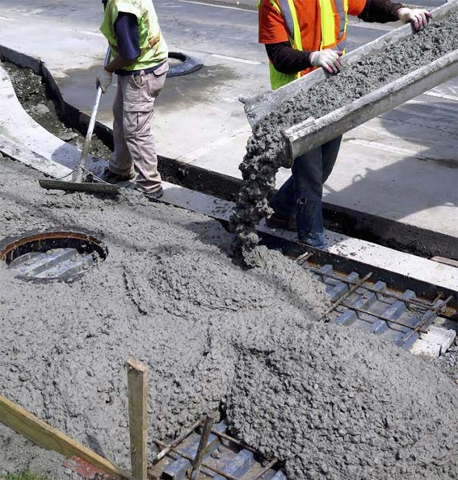
Concrete Admixturing
Concrete admixtures can improve concrete quality, manageability, acceleration or retardation of setting time among other properties that could be altered to get specific results. Our provided solution not only meet high requirements for durability, they fit the trends of modern concrete placing and architectural aspects in combination with ecological requirements. These all are supplemented by a comprehensive range of technical services that can be used individually depending on the specific needs of the customer.
Categories of concrete admixturing
Set-Retarding :Set retarding concrete admixtures are used to delay the chemical reaction that takes place when the concrete starts the setting process. These types of concrete admixtures are commonly used to reduce the effect of high temperatures that could produce a faster initial setting of concrete. Set retarding admixtures are used in concrete pavement construction, allowing more time for finishing concrete pavements, reducing additional costs to place a new concrete batch plant on the jobsite and helps eliminate cold joints in concrete. Retarders can also be used to resist cracking due to form deflection that can occur when horizontal slabs are placed in sections. Most retarders also function as water reducers and may entrain some air in concrete.
Air-Entrainment : Air entrained concrete can increase the freeze-thaw durability of concrete. This type of admixture produces a more workable concrete than non-entrained concrete while reducing bleeding and segregation of fresh concrete. Improved resistance of concrete to severe frost action or freeze/thaw cycles. Other benefits from this admixture are:
- High resistance to cycles of wetting and drying
- High degree of workability
- High degree of durability
Water-Reducing : Water-reducing admixtures are chemical products that when added to concrete can create a desired slump at a lower water cement ration than what is normally designed. Water-reducing admixtures are used to obtain specific concrete strength using lower cement content. Lower cement contents result in lower CO2 emissions and energy usage per volume of concrete produced. With this type of admixture, concrete properties are improved and help place concrete under difficult conditions. Water reducers have been used primarily in bridge decks, low-slump concrete overlays, and patching concrete. Recent advancements in admixture technology have led to the development of mid-range water reducers.
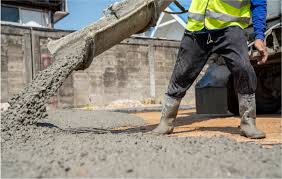
Accelerating : Accelerating concrete admixtures are used to increase the rate of concrete strength development, or to reduce concrete setting time. Calcium chloride could be names as the most common accelerator component; however, it could promote corrosion activity of steel reinforcement. Nonetheless, concrete best practices such as proper consolidation, adequate cover and proper concrete mix design could prevent these corrosion issues. Accelerating admixtures are especially useful for modifying the properties of concrete in cold weather.
Shrinkage Reducing : Shrinkage reducing concrete admixtures are added to concrete during initial mixing. This type of admixture could reduce early and long term drying shrinkage. Shrinkage reducing admixtures can be used in situations where shrinkage cracking could lead to durability problems or where large numbers of shrinkage joints are undesirable for economic or technical reasons. Shrinkage reducing admixtures can, in some cases, reduce strength development both at early and later ages.
Super plasticizers : The main purpose of using super plasticizers is to produce flowing concrete with very high slump in the range of 7-9 inches to be used in heavily reinforced structures and in placements where adequate consolidation by vibration cannot be readily achieved. The other major application is the production of high-strength concrete at w/c's ranging from 0.3 to 0.4. It has been found that for most types of cement, super plasticizer improves the workability of concrete. One problem associated with using a high range water reducer in concrete is slump loss. High workability concrete containing super plasticizer can be made with a high freeze-thaw resistance, but air content must be increased relative to concrete without super plasticizer.
Corrosion-Inhibiting : Corrosion-inhibiting admixtures fall into the specialty admixture category and are used to slow corrosion of reinforcing steel in concrete. Corrosion inhibitors can significantly reduce maintenance costs of reinforced concrete structures throughout a typical service life of 30 – 40 years. Other specialty admixtures include shrinkage-reducing admixtures and alkali-silica reactivity inhibitors. Corrosion inhibiting admixtures have little effect on strength at later ages but may accelerate early strength development. Calcium nitrite based corrosion inhibitors do accelerate the setting times of concretes over a range of curing temperatures unless they are formulated with a set retarder to offset the accelerating effect.
Silica Fume
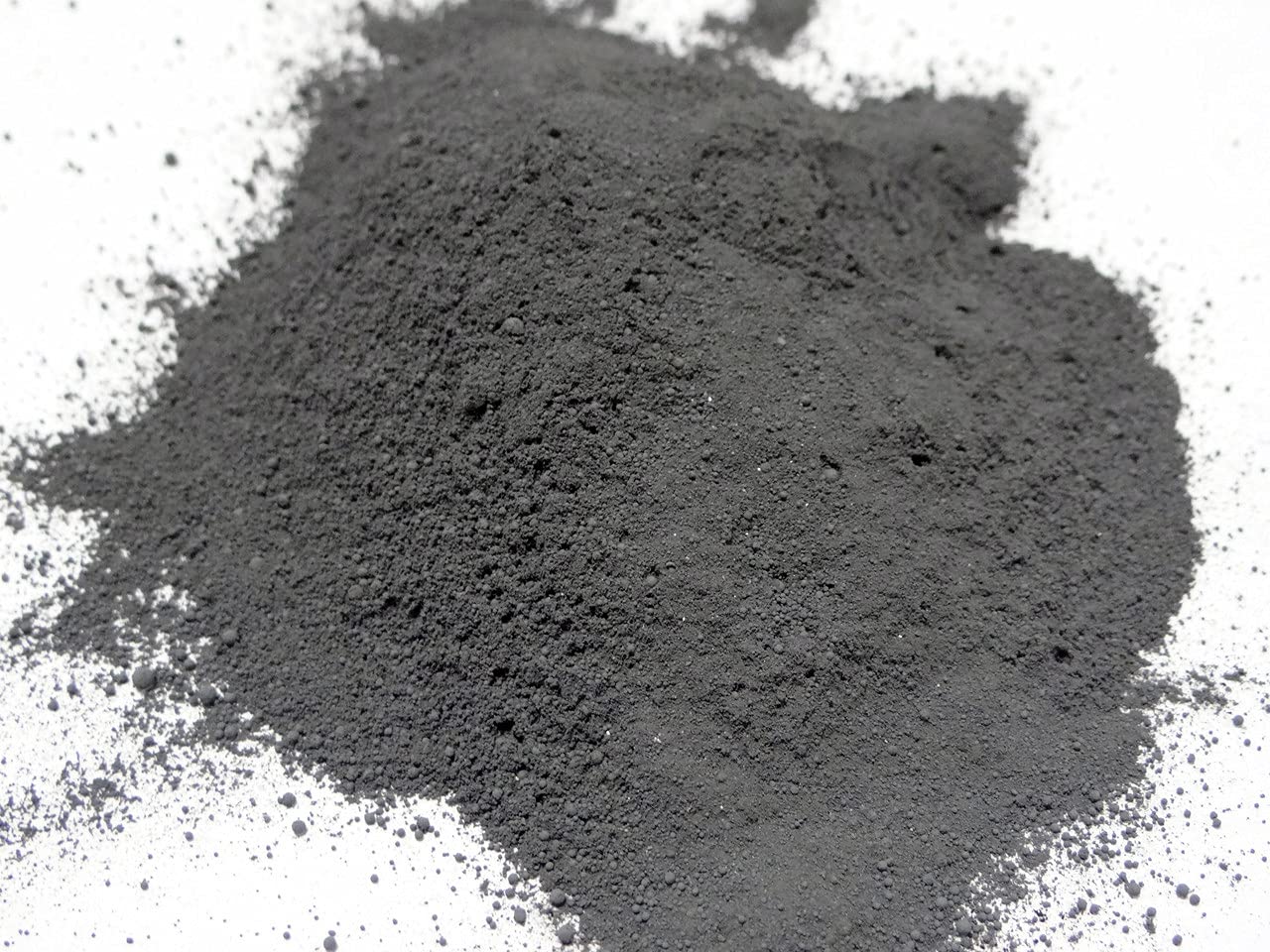
Silica Fume is a high performance, densified silica fume powdered product, derived as a by-product of producing silicon metal or ferrosilicon alloys. Used in pre-mixed concrete for enhancing mechanical properties of concretes with special performance requirements, including increased strength, reduced permeability, improved abrasion resistance and increased corrosion resistance.
Silica fume is consists of very fine particles. Its extreme fineness and high silica content, silica fume is a highly effective pozzolanic material. Being a highly reactive pozzolan, silica fume chemically reacts with the calcium hydroxide present in the cement paste, creating a stronger calcium silica hydrate 'making it sticky'. The result is improved paste to aggregate bond (excellent for shotcrete) and higher concrete strengths. Silica Fume is typically grey in colour and is categorised as a supplementary cementitious material (SCM).
Special Features:
- Increase compressive strength
- Reduces chloride ion permeability
- Increase abrasion resistance
- Enhanced sulphate resistance
- Improved durability
- Enhanced resistance to chemical attack and deterioration
- Increase bond strength